

 Shopify blog

Point-of-purchase (POP) displays are physical or digital displays you see in stores designed to grab your attention.
POP displays are designed to work in a split second. Retailers use them to catch a customer’s attention when browsing, turning a quick “just looking” into a purchase.
Point-of-purchase marketing allows you to influence shoppers already in your store. It’s not a marketing strategy to increase foot traffic, but rather to increase sales once customers come into your store.
In this guide, you’ll learn what point-of-purchase displays are and how they differ from point-of-sale systems, explore the five main display types, and discover proven placement strategies with real retail examples. You’ll also get design tips and tactics for measuring your displays’ return on investment (ROI).
What are point-of-purchase displays?
Point-of-purchase displays are physical or digital marketing displays placed in retail stores to advertise products and encourage customers to make purchasing decisions. Also known as POP displays, these fixtures range from simple shelf talkers (small signs, also called stoppers or flags) and dump bins (product-filled containers) to sophisticated digital screens and motion-activated robotics.
Retail POP displays promote specific merchandise and special offers to shoppers already in store. While the strategy with budget or value-tier items is to sell on price, a strategic display can be used for premium or mid-range products.
Displays can be placed near the checkout counter or in designated areas of the store to encourage purchase decisions—for example, at aisle ends or in center aisles.
Point-of-purchase vs. point of sale
Point-of-purchase displays showcase products throughout the shopping area, such as in aisles, on endcaps (aisle ends), at entrances, or in center aisles. These include shelf stoppers, freestanding displays, dump bins, and specialized fixtures with promotional signage designed to capture customers’ attention before they reach checkout.
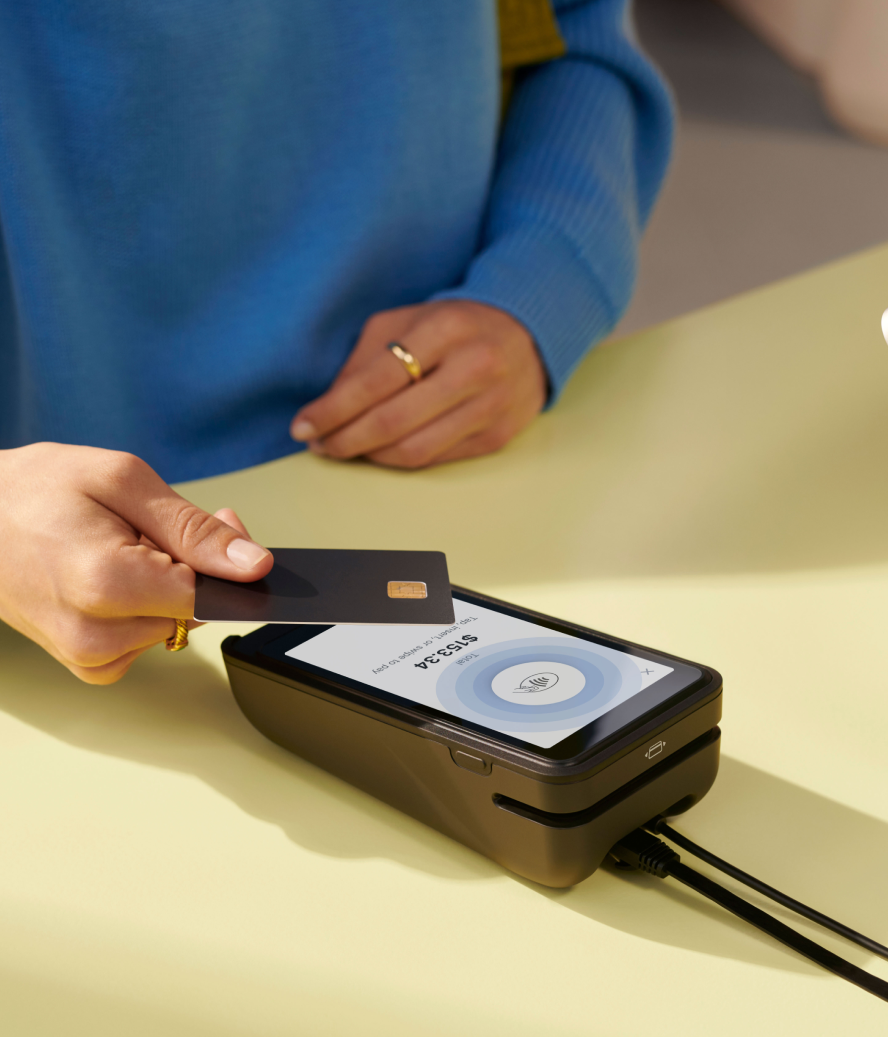
A point of sale (POS) is where a transaction occurs. It’s where goods are sold and exchanged. But you can also use this area of your store to display impulse items, with a goal of encouraging customers to increase their purchase amount at the last minute.

While POP displays influence which products customers decide to buy, POS displays have the potential to capture last-minute impulse purchases.
For example, in a jewelry store, the POP might be a countertop display where customers choose a pair of earrings, while the POS is the checkout counter where you collect payment and wrap their purchases. You can use your jewelry POS area to display jewelry cleaners or small jewelry boxes so shoppers can easily add related items at checkout.
Point-of-purchase marketing strategy
Point-of-purchase marketing delivers messages to customers when they’re deciding what to buy. The strategy can be used both in-store and online to influence purchasing behavior.
This marketing strategy can be used as a final nudge in a customer’s shopping trip. While ads are used to get people through the door, point-of-purchase marketing is used once they’re inside.
In-store displays play an important role in POP marketing:
- Place products strategically around your store so shoppers notice them and are more likely to buy.
- Make merchandise easy to reach so customers can pick up items quickly.
By setting up in high-traffic spots like entrances, endcaps, or checkout lines, you make your brand visible. When you pair that visibility with clear messaging, a great deal, or even a quick demo, you can gain a browser’s attention.
For example, a jewelry store could have a banner above a shelf display that provides an overview of the materials used to make its earrings and the quality of the metals. Highlighting the features and benefits of the products gives customers more information they may need to make a purchasing decision.
As Michelle Razavi, co-founder at Elavi, says, “If you’re not merchandising, if your product is not out on shelves, if it’s not looking cute, then you are missing out on easy sales. And it’s so important because if you’re not visible, you can’t be bought."
Types of point-of-purchase displays
You can group POP displays by the fixtures you use and how long they stay in place. Knowing the differences can help you match your displays to your store layout, campaign, budget, and merchandising goals. Here are the most common types:
Temporary POP displays
Temporary retail displays are the most commonly used type of POP. You can use them to feature seasonal products or special promotions. They’re less expensive, made from cardboard, and used in the form of:
- Freestanding displays
- Endcap displays
- Dump bins
- Countertop displays near checkout
Temporary displays stay up for a few days or weeks during events such as major product launches or seasonal sales. Since they’re built for short-term use, they’re cheaper than permanent fixtures, making them a great, low-risk way to test new displays.
Semi-permanent POP displays
Also known as off-shelf displays or secondary displays, semi-permanent displays generally stay up for three months to a year. They’re made from stronger materials, including glass, metal, wood, heavier cardboard, and hard plastics.
Semi-permanent displays range in size from large aisle displays to smaller countertop displays. For example, a jewelry shop might use a glass display box that staffers can move from the checkout counter to a table or a shelf.
It could also be a pop-up shop that’s set up in a section of your retail store to highlight a specific brand or a range of products you stock.

Semi-permanent displays balance durability with flexibility. They offer more durability than a quick weekend setup without the total commitment of a permanent fixture. They’re tough enough to last through a whole season yet easy to move as your store’s layout or priorities change. This makes them ideal for things like holiday gift sets or back-to-school promotions.
Permanent POP displays
Permanent point-of-purchase displays are larger and made from sturdier materials, such as glass, wood, metal, and hard plastics. Depending on how well they’re maintained, they provide long-term merchandising infrastructure that anchors your store design.
You can use permanent displays to build the foundation of your store design and then mix things up weekly, monthly, or however you choose with semi-permanent and temporary POP displays.
While permanent displays cost more than temporary ones, they become more cost-effective the longer you use them. Built from materials such as tempered glass, metal, and hardwood, they can withstand more wear and tear. Plus, they create familiar spots and brand zones that may help repeat customers remember where to find what they need.
Digital POP displays
Digital POP displays have a digital monitor or LCD screen. In most cases, they still have a physical container and are used to advertise featured products via video or slideshow.
Shoppers can check stock or compare products on interactive touchscreens, while store owners can update customer-facing displays for flash sales or new deals.
David’s Bridal, for example, uses Shopify POS extensions built on Shopify APIs to offer in-store digital kiosks. Associates can retrieve customer profiles and explore the full product catalog.
“Being able to show our entire catalog to the bride is something we could only accomplish on Shopify,” says Ravi Raparla, the brand’s CIO. “In fact, Shopify, with its API and platform extensibility capabilities, made creating this experience honestly pretty easy because the platform does all the heavy lifting.”

Use digital screens alongside mobile tools that let shoppers scan QR codes to read product reviews, tap near-field communication (NFC) codes for product details, or use augmented reality to preview your furniture in their home, or your jewelry on their hand.
Robotic POP displays
Robotic POP displays entered the retail market as brands sought innovative ways to capture attention in increasingly crowded retail environments. They’re small boxes with a robotic arm that’s triggered when the customer walks near.
These displays are a newer form of retail tech, using a mix of motion, light, and sound to create standout brand moments. Sensory displays can capture attention more effectively than static displays.
Additional display types
Beyond these main POP categories, retailers use specialized display fixtures for specific merchandising needs:
- Power walls. These cater to the invariant right, which is retail anthropologist Paco Underhill’s theory that most North Americans turn right after entering a store. Position hero or high-margin products here.
- Inline displays. These sit right on the regular store shelves rather than standing alone. They use special lighting or signs to “pop” out and seek attention as shoppers walk down the aisle.
- Gravity feed displays. These use angled tracks to automatically slide products forward whenever someone grabs one. They are used for things like soda or snacks because they look full and organized.
- Sidekick displays. These are narrow units that hang off the side of a larger endcap display. They’re used for add-on items, like putting batteries right next to the electronics they power.
Activewear brand TALA uses a combination of these in their retail locations:
Benefits of point-of-purchase displays
POP displays deliver measurable advantages for your retail business:
Low cost
Most POP displays are temporary and more affordable than permanent in-store fixtures. You can change them often to refresh the shop floor at low cost.
Easy testing
Because POP displays are temporary and affordable, using them to test new products or to try different ways of displaying specific merchandise is an option. They’re also versatile and transportable.
Extra product visibility
It can be difficult to spot merchandise on crowded shelves. Featuring products in secondary placements, such as POP displays, is a tactic you can use to highlight particular items, rotating products as little or as often as you want.
Hyper-targeted promotions
You can use a POP display to highlight a specific product, collection, or brand. This can be used as a strategy to help grab the attention of a specific audience or customer segment and build brand awareness.
Highlighted specials
POP displays are a way to advertise special promotions and encourage entice customers to buy.
Tip: Create discount codes that automatically apply at checkout with Shopify POS. “It used to require multiple steps to apply a percentage off products that were part of a promotion,” says Tomlinson’s pet supply owner, Kate Knecht. Since moving to Shopify, Tomlinson’s checkout times are 56% faster.

Environmental responsibility
Using eco-friendly materials for your displays is a strategy you can use to meet customer expectations while doing right by the planet.
For temporary setups, opt for cardboard that you can easily recycle once a campaign wraps up. POS displays can be made using recycled content, eco-friendly soy inks, and designs that are easy to take apart for recycling.
For longer-lasting displays, consider Forest Stewardship Council (FSC)–certified wood, recycled plastics, or even biodegradable materials that hold up well in-store but break down safely later.
Tip: It is possible to build permanent fixtures with modular parts. This means you can just refresh the graphics instead of tossing the whole unit, which reduces waste and extends the life of your POP display.
Tips for point-of-purchase displays
Choose the right location
Point-of-purchase marketing happens at the cash register, checkout counter, and beyond.
You can experiment with different placements or try these approaches for various purchase categories:
- Impulse buys. Cheap grab-and-go items like snacks or magazines are placed near checkouts, where they are easy to purchase. You can turn long checkout lines and wait time into an extended shopping experience for your customers. Displays can be used to keep them engaged and interested as they wait.
- New launches. If people don’t know a product exists, a standalone display can explain what it is and why they need it.
- Premium goods. For higher-end items, a display lets you highlight quality and features that might not be obvious from the box, and may help rationalize the price.
- Seasonal items. Limited-edition or holiday products have built-in urgency. Using a display can tap into a “buy it now” reaction.
- Complementary products. Grouping related items together—like batteries next to electronics—is a strategy used to make shopping easier for the customer.
Review your competitors to see what types of POP displays they use. If you notice some setups catch shoppers’ attention more than others, emulate what works and improve what doesn’t.
Provide samples, demos, or other experiences on the sales floor
Costco is well known for offering product samples throughout its stores. Suppliers and vendors are invited into the store on weekends to set up booths and tables where passing customers can snag a sample of their product.
Lola’s Cupcakes adopted this approach to celebrate the reopening of its London store:
If you don’t sell consumable items, providing product demos is an alternative tactic. These “try before you buy” experiences are used to help inform customers on your product. Another strategy is hiring a salesperson to suggest additional items and demonstrate their value, in an effort to influence purchasing decisions.
Tip: Look through your point-of-sale (POS) system data to find your biggest fans, then invite them to exclusive sampling events or give them early access to new products.
Create a pop-up shop for your own inventory
If you want to apply a pop-up shop concept to your store and products, you can do it by highlighting a specific product line or inventory segment. Consider featuring seasonal items to cultivate a sense of urgency.
Leverage cross-selling
You can use POP displays to showcase complementary or similar products. Doing this can make it easier for customers to find products they can purchase together.
For example, if you own a jewelry store that sells earrings, necklaces, and bracelets, you can display coordinating sets or complementary pieces. You could also display jewelry cleaning and storage products on the same fixture to highlight relevant add-ons.

Offer tangible or interactive experiences
Experiential retail can be an opportunity to build emotional connection to shoppers. By adding interactive touches like live demos, hands-on testing, or even themed environments, there’s a chance to make a basic transaction more memorable.
To apply this idea to your boutique, for example, you could display your new summer collection in a space decorated with beach chairs and sand. You could also use a mannequin display to highlight bestsellers from summer collections, adding lifestyle images to demonstrate how the clothes look in warm-weather settings.
Design your displays for maximum impact
Display design is all about grabbing attention and communicating a clear message. Here’s how to do it:
- Keep messaging short and sweet. Shoppers decide in a split second, so stick to five to seven words max. Phrases like “Try me” or “Save 20%” work because they’re concise and direct. Use big, bold fonts, and if you must add extra info, keep it brief.
- Use color psychology to set the mood. Warm tones like red and yellow create excitement and urgency for sales, while cool tones like blue and green feel more premium and calming.
- Show, don’t just tell. People process and remember images more than words. Use photos of your products in action so shoppers can imagine themselves using them.
- Make displays interactive when possible. Interactive touches like “Press here” buttons or sample dispensers create more memorable experiences. When a POP display is fun to play with, shoppers are more likely to snap a photo and share it online, which is free marketing for you.
- Design for your environment. Tailor your display to its location. If the area is dim, use bright lights or high-contrast colors. In busy aisles, consider 3D elements to catch attention from multiple angles. Save detailed info for quieter spots where people can linger.

Point-of-purchase display examples
Consider how big retailers use displays to find inspiration for your own shop. Here are a few proven strategies:
- Grocery sampling stations (Whole Foods, Trader Joe’s). Set up sampling booths to let customers try new or in-house products. It turns a potential purchase into a free experience, making it much easier for someone to say yes to a new product.
- Hands-on testing (Best Buy). Let shoppers play with gadgets such as laptops or headphones so they understand how they work.
- Checkout line finds (Sephora, Marshalls). Those little bins of travel-sized treats and accessories you see while waiting in line transform boring wait time into shopping time, encouraging customers to grab one last item before they check out.
- Themed experiential zones. Immersive setups, such as seasonal apparel themes or holiday nooks, do more than showcase products. They create “moments” that encourage sharing and can generate content for your social media feeds.
How to measure the effectiveness of your POP display
Set clear, realistic goals so you know what success looks like.
To evaluate POP performance and measure a display’s effectiveness, consider:
- Impressions. The number of shoppers who see the POP display and view it for a defined period of time. Assign store staff to monitor the display, or combine in-store camera footage with foot traffic counts to gauge impact.
- Engagement. The number of shoppers who look at the display and interact with it by reading labels, touching, opening, smelling, or testing products.
- Conversion. The number of products you sell when a display is up versus when it’s not. To measure ROI, compare additional conversions during the display period against its costs, including design and setup. If it makes sense, you can also quantify and include the display’s floor space value.
Tip: View the Sales by product report in Shopify admin to measure conversions before and after establishing a display.
Read more
- Open To Buy Definition + Formula for Retail Planning
- Shopping Tourism: Why Retailers Should Care (+ Tactics to Leverage this Trend)
- What is Visual Search: How Retailers Can Use it to Enhance the Customer Experience
- How to Make Your Product Copy More Persuasive
- Trimming the Fat: How Streamlining Your Brand Experience Can Lead to More Sales
- 10 Retail Experts Share Their #1 Tip for Marketing and Growing Your Store
- 5 Lessons Traditional Retailers Can Learn From DTC Brands
- The 8 Best Podcasts for On-the-Go Retail Entrepreneurs
- 7 Examples of Retailers Collaborating to Reach Broader Audiences
- 4 Easy Ways to Get Better Reviews on Your Google Places Page
Point of Purchase Displays FAQ
How much do point-of-purchase displays cost?
POP display costs vary by durability, included technology, and degree of customization. Temporary cardboard displays are the most affordable entry point, while permanent fixtures made from tempered glass, metal, or hardwood cost more upfront but become more cost-effective the longer they stay in use. Budget for shipping and assembly, and compare multiple quotes to get the best price.
Who designs and produces point-of-purchase displays?
Retailers can purchase ready-made displays, commission a specialist manufacturer, or design them in-house. Display manufacturers handle full-scale production and technical expertise. In-house design teams maintain tighter brand control. A hybrid approach — pairing an internal creative team with a third-party manufacturer — balances brand consistency with production quality.
How long does it take to produce a custom display?
Production timelines depend on the complexity of the project. Basic cardboard setups are the fastest to source and assemble. Larger, custom-shaped, or multi-material units require additional design, prototyping, and testing time. Plan lead times carefully for seasonal campaigns, since delays can mean missing a key sales window.
What products sell best with point-of-purchase displays?
Products that benefit most from POP displays are those that trigger quick, low-consideration decisions or need a little extra explanation to justify the purchase. Top performers include impulse snacks and drinks, convenience items like toiletries, tech accessories, seasonal products, and small gifts. Premium or mid-range items also perform well when the display communicates quality and features the packaging alone cannot convey.
How do I know if my POP display is actually working?
Track three core metrics: impressions (how many shoppers see the display), engagement (how many interact with it), and conversion (units sold while the display is up versus when it is not). Compare sales data before and after the display goes live, then weigh the lift in conversions against design and setup costs to calculate ROI. Foot traffic tools like overhead sensors or heat mapping can add further precision.
Can point-of-purchase displays work for online retail?
Yes — the core tactics translate directly to digital storefronts. Hero banners and "New Arrivals" sections act as digital endcaps, while "frequently bought together" suggestions recreate checkout impulse buys. Triggered pop-ups for sales or new launches mirror in-store signage, and 360-degree views or AR try-ons replicate the try-before-you-buy experience shoppers get on the sales floor.

