


The rapid acceleration of ecommerce means the traditional customer journey is no longer linear. There are several micro-decisions that customers face between interacting with your brand for the first time and becoming repeat customers. It’s your responsibility to cater to them with personalized marketing messages and product recommendations.
As the Stages of Change Model told us in Customer Psychology in Ecommerce: Behavior Change in the Digital Age, one slip up from an external force can cause a person to either progress or regress in their journey. The wrong message at the wrong time can force people to flee. On the other hand, matching your offer to the right stage with a small personal touch works like magic.
What is the ecommerce customer journey?
The ecommerce customer journey is the complete end-to-end experience of a customer from the initial interaction with a brand's online store to the final purchase. This includes browsing, product selection, checkout, and post-purchase support. Understanding and optimizing the ecommerce customer journey helps businesses enhance engagement and increase conversions.
The customer journey stages
Awareness
Consideration
Acquisition
Service
Loyalty
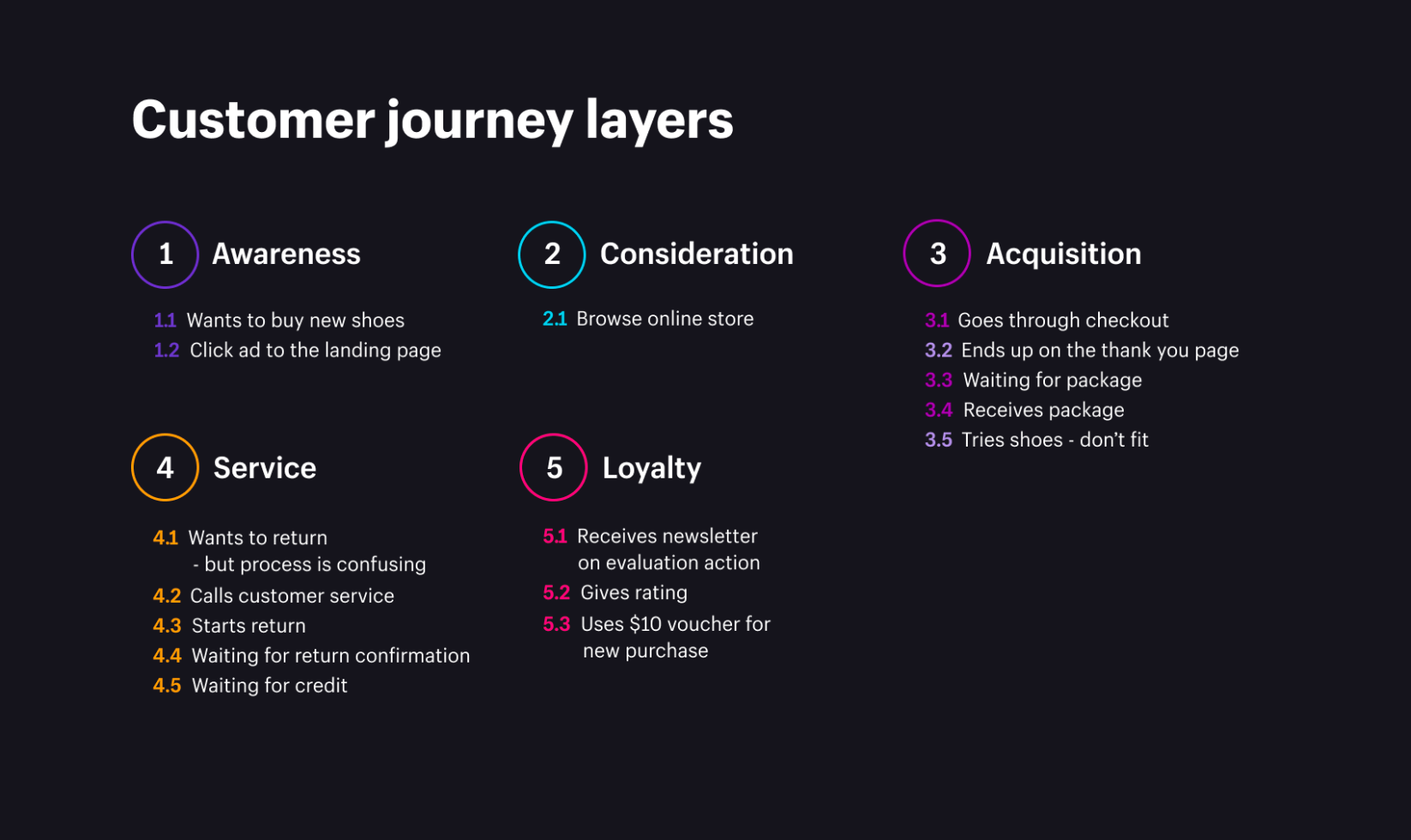
Diagram showing the five layers of an ecommerce customer journey.
Awareness
Awareness is the first stage in any ecommerce customer journey. It starts when a customer’s interest is piqued, or they’re already looking for a product or service to solve a problem they’re currently experiencing. Common customer touchpoints at this stage include social media advertising or word-of-mouth referrals from existing customers.
Consideration
A person’s commitment to find a solution increases as they progress through to the consideration stage of the customer journey. Here, they weigh their options and visit your online store—as well any competing brands that might better serve their needs.
Acquisition
A customer reaches the acquisition stage once they make the final purchasing decision. This can happen via your ecommerce store, a marketplace, at a retail location, or through a social media storefront.
Service
The ecommerce customer journey doesn’t end once a customer has made their first purchase. Inevitably, a segment of customers will need help with their order. Perhaps they want to initiate a return, understand how the product works, or see whether there’s a discount available on their next order. We can categorize this as the service stage of the customer journey.
Loyalty
Loyalty happens when existing customers continue purchasing from your brand. It’s the final stage of the journey, but not the least important. Studies show that despite only accounting for 21% of a brand’s audience, loyal customers contribute 44% of a merchant’s total revenue.
Aside from initiating another purchase and springing back to an earlier stage in the journey, customer touchpoints that frequently happen at the loyalty stage include leaving a review or recommending the product to a friend.
What is a customer journey map?
An ecommerce customer journey map is a diagram that details how customers engage with your company across various mediums including online, retail, and contact with your customer support team. They tell you where users are coming from, how many days or visits it takes to move from one stage to another, what the goal of the user is in each stage, and how each segment behaves.
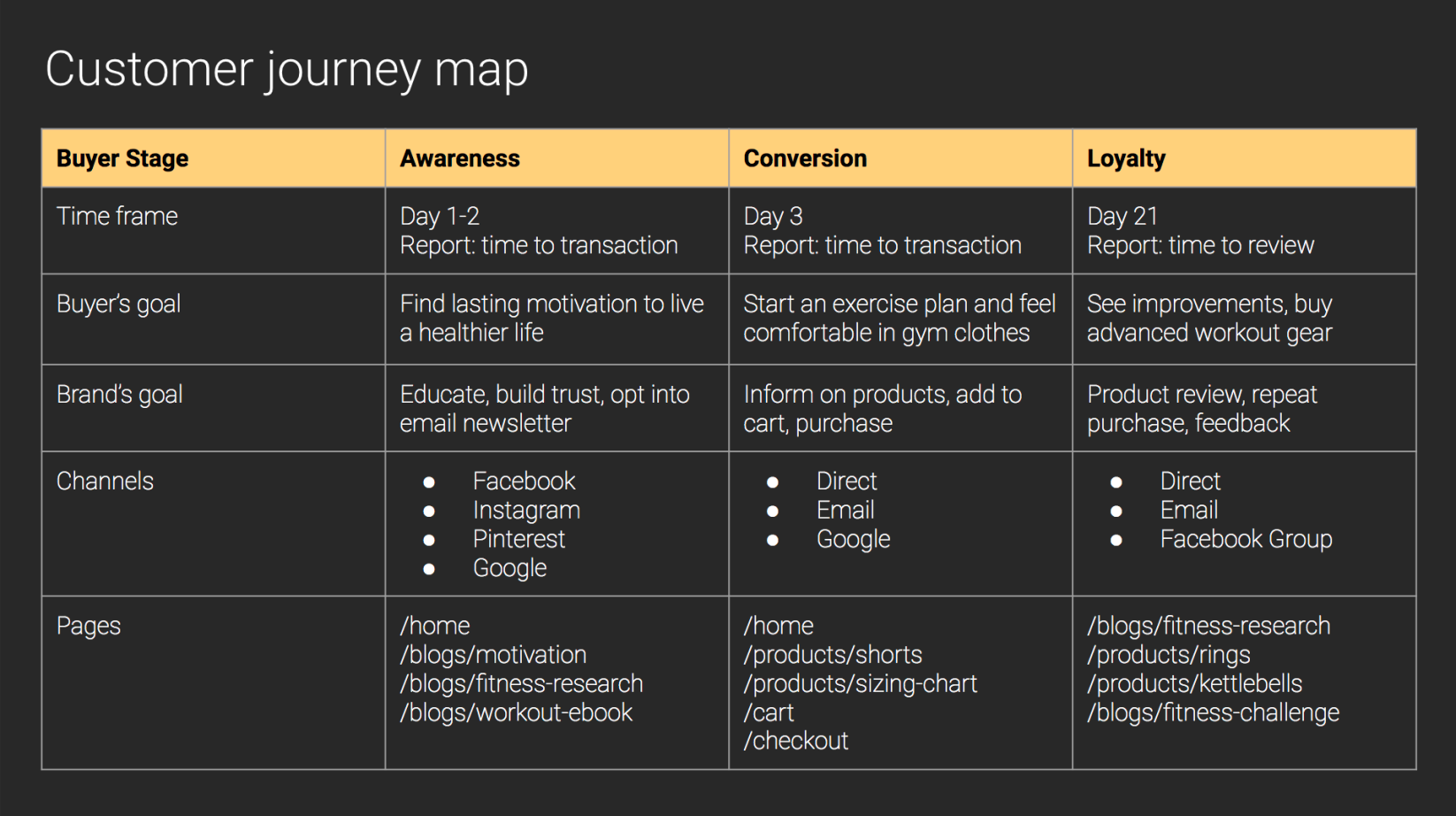
Example of a customer journey map.
3 steps to map customer journeys with data
While customer experience management is on the top of every C-suite executive’s list, the reality is, designing a robust omnichannel retailing strategy and managing the customer’s experience within the entire customer lifecycle is virtually impossible.
Instead, a far better approach is to identify your most valuable customers (i.e., personas) and map their journeys one stage at a time.
Create customer personas to envision what your ideal customer might be going through when seeking your product. For a head start, identify recent customers or brand loyalty program members who made a purchase on your website. Interview them to understand the following questions:
Why were they looking for the product that they bought on your website?
How did they research the product?
What criteria helped them make their purchase decision?
Which of your competitors’ sites did they visit while evaluating products?
Why did they choose your website?
What was their experience like on your website when buying the product?
What can be improved?
Start small and prioritize the most critical customer personas for your business. The real key, however, is using your existing data to map the ecommerce customer journey based on psychological principles to drive more sales.
1. Monitor how customers interact with your ecommerce business
Understanding how users move through your store is critical to producing sales that follow a psychologically informed model. For example, why would sales be low if you’re offering a discount code to all first-time visitors? The offer (or, ability) might be great, but consumers still lack the motivation to buy. In this case, it doesn’t matter how much products are discounted.
This common scenario can be uncovered with the Google Analytics funnel exploration report, which will allow you to select a path you’d like to look into. Or the path exploration report, which gives you a look into your user’s journey.
Just make sure to examine different segments of users, whether it’s first-time visitors, returning visitors, or purchasers, or create a custom segment for visitors with long session durations but no purchases.
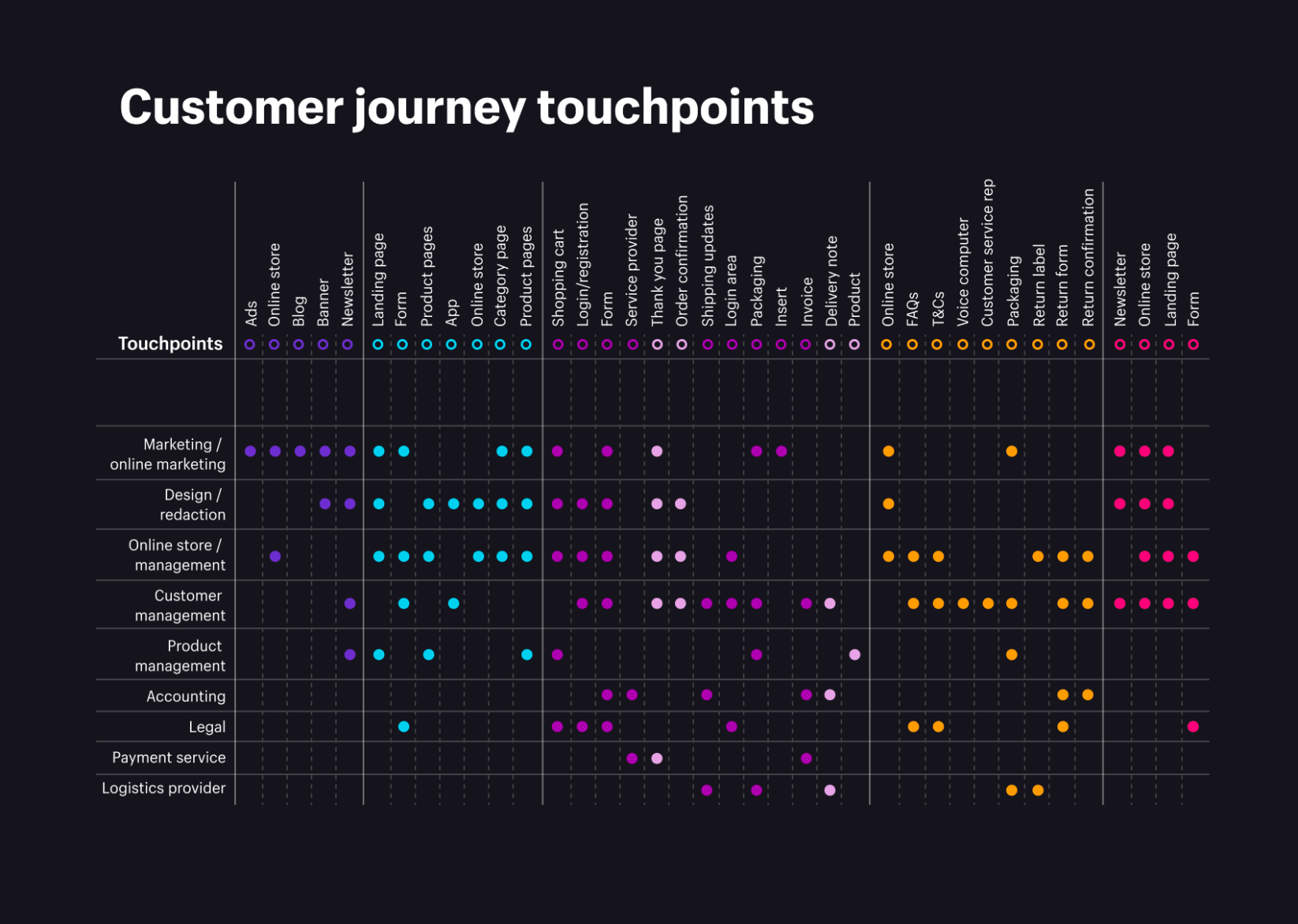
Touchpoints a customer has with a brand, starting with ads and social media and ending with newsletters.
Look for trends, like specific drop-off points where hoards of users left your site without converting. Conversely, look for commonalities between behavior. What page do most first-time visitors view after landing on your homepage? In the first stage of an ecommerce customer journey map, you will start to notice that most of these first-touch pages revolve around building awareness before driving conversions.
You can also install Session Recording & Replays on your Shopify Plus store to record visitor sessions. You’ll get heat maps and also be able to see user behavior as they move from page to page.
Detailed session histories can generate ideas of which pages correspond to each stage of the journey. For instance, your blog or story pages are often perfect jumping-off points to educate users. Hiya Health uses its story page to build awareness, leveraging it as an external force to push consumers from one stage to the next.
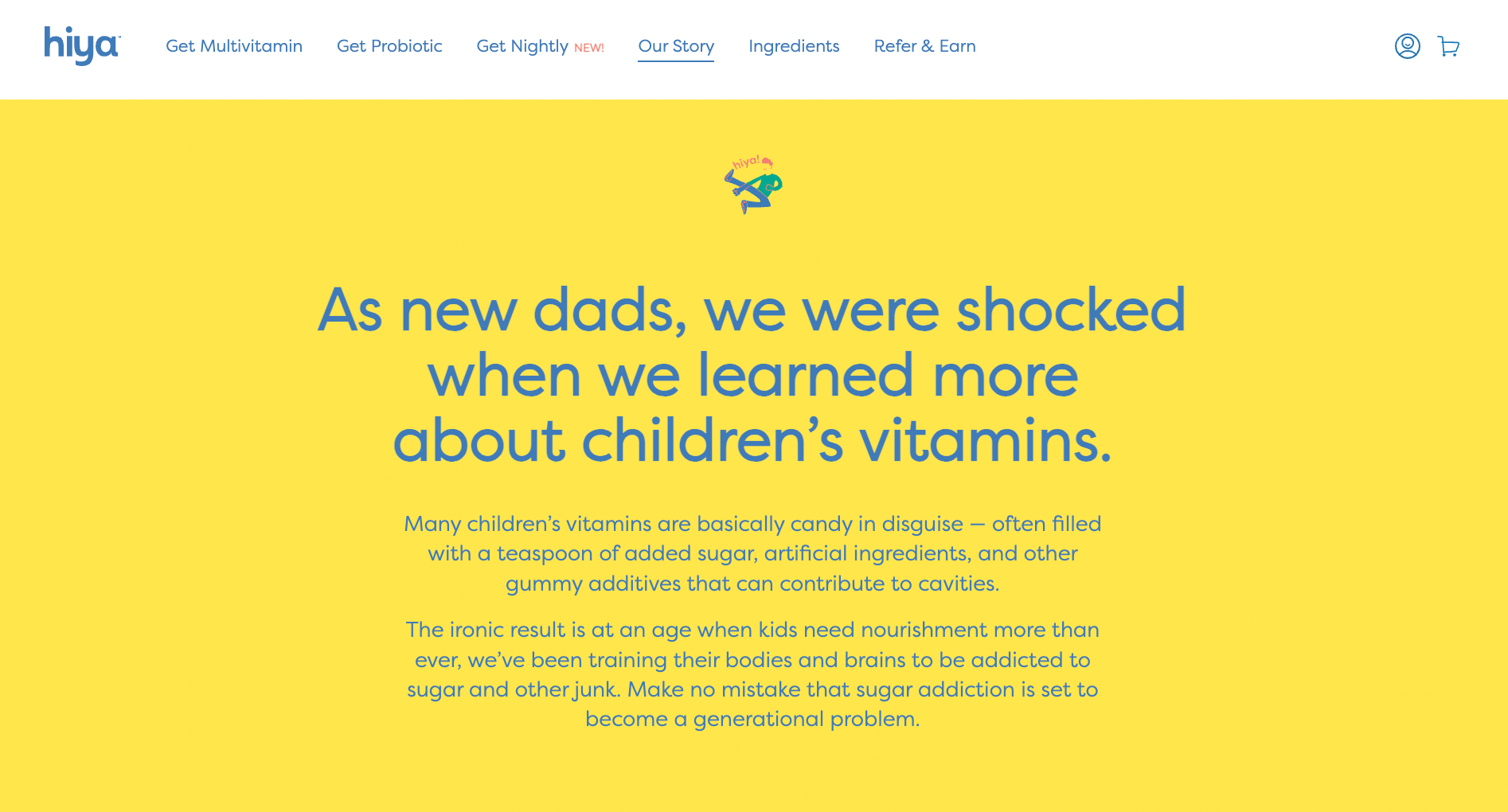
Hiya Health’s about page explaining how the brand started when its founders were shocked about the contents of children’s vitamins.
2. Analyze the top conversion path report to see what platforms people use at each stage
An omnichannel strategy or multichannel strategy is critical because ready-made buyers don’t just materialize on your website. It often requires multiple touchpoints along multiple channels or platforms before they eventually pull the trigger.
People might find your business through a referral on social media. They might read your tweets or browse your Instagram. Then, they might head back to your site for more—all before handing over their credit card. As a result, it’s also more critical than ever to optimize people’s experience as they move from one platform to the next.
Knowing the typical paths on your site is one thing, but it’s another to understand when and why customers use different channels before buying.
Note these different channels and their specific order sequencing before purchase. If you notice that social plays a huge role in awareness, add that to your buyer’s journey. You can later tap into this customer data and share content on social that focuses on brand building rather than selling, like Rare Beauty:
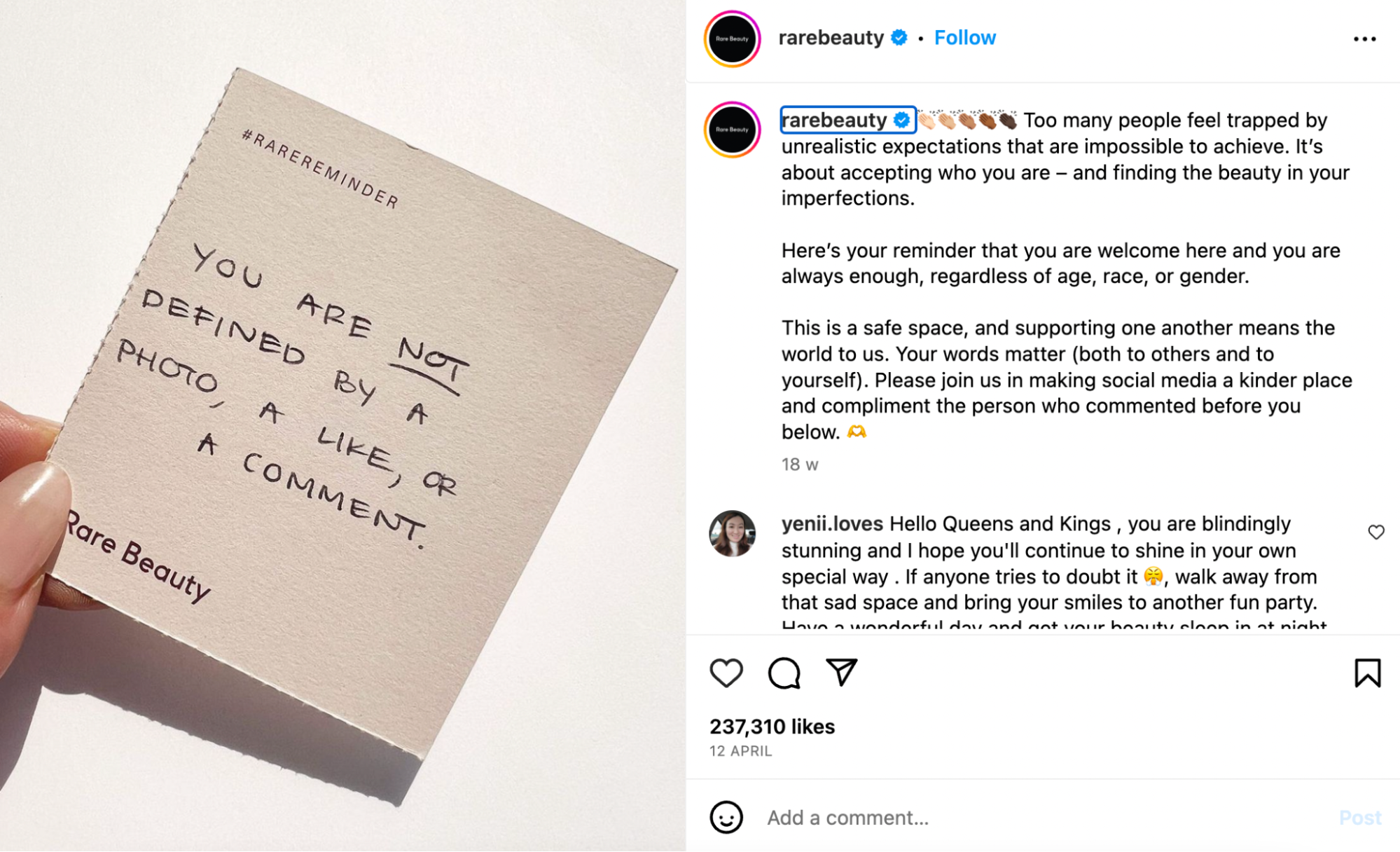
Screenshot of an Instagram post by Rare Beauty. Source: Instagram
LaCkore Couture takes this one step further by prioritizing two metrics: average order value (AOV) and customer lifetime value (CLV). Founder Erin LaCkore says, “We primarily use Triple Whale to gather in-depth insights about our customer behavior and purchasing patterns. Complementing this, Google Analytics lets us understand traffic sources, time spent on our site, and other key metrics. All this data is visualized and simplified in Google Data Studio, allowing our team to draw actionable insights at a glance.”
Erin adds that by using a combination of these data points she gets a snapshot of the average spend each time a customer shops and the total projected revenue from a single customer over their relationship with the brand. “Based on AOV and CLV, we adjust our value ladder,” she says. “Introducing mid-tier products, bundle offers, or loyalty programs ensures customers feel they’re getting immense value, while we ensure profitability.”
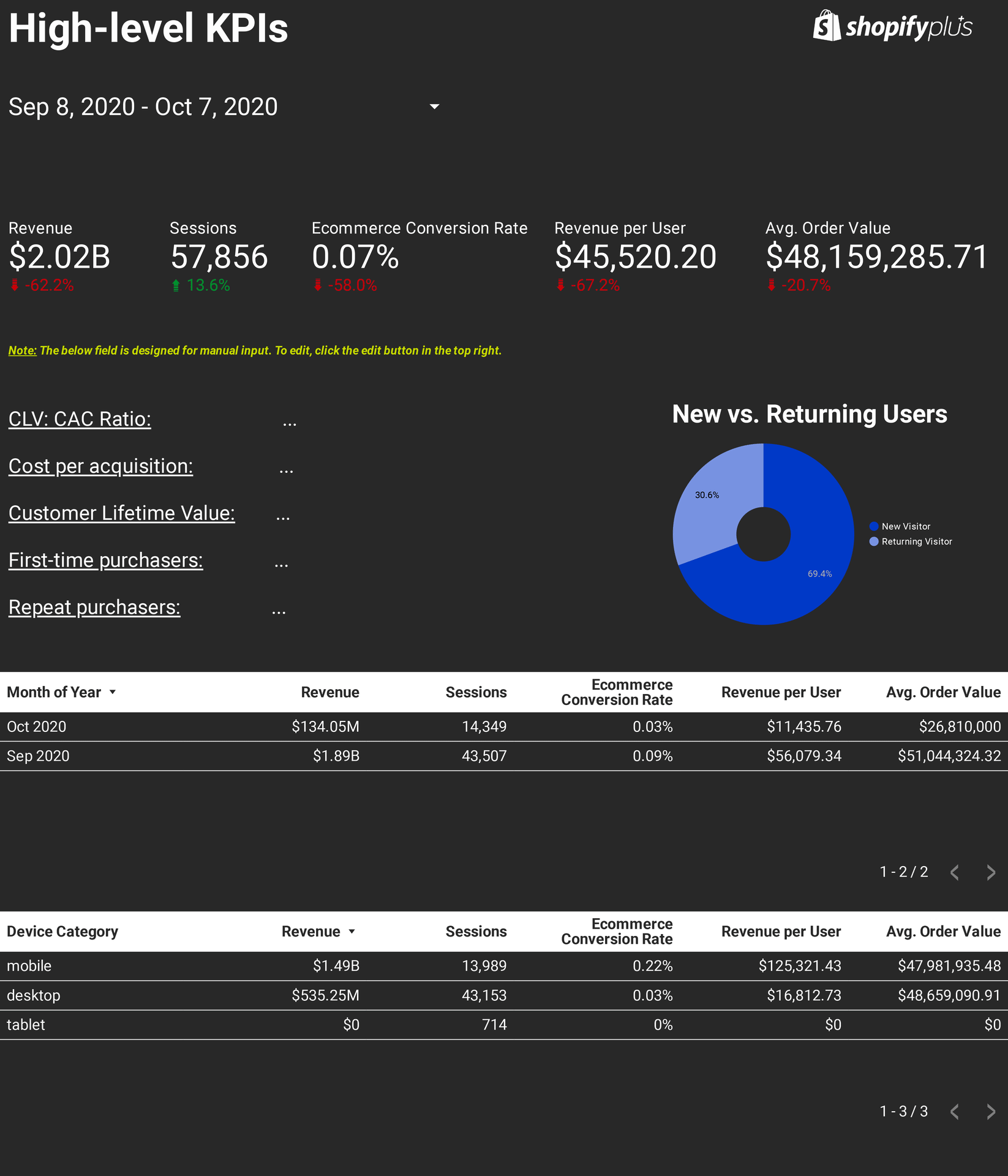
If you’re a Shopify Plus merchant, you can access our custom Google Data Studio reports in our Data Analysis course to help you find your metrics that lead to a sale. There you can see how many sessions the average user undertakes before making a purchase, and how many days it takes on average to make a purchase. You can further segment this by demographics or traffic source.
3. Mold your customer journey to the needs of your visitors
The decision to purchase ultimately comes down to one major thing: your relationship with your customers. Again, this means understanding consumer psychology and building a strong relationship by providing value at each stage of their journey.
Customer data analysis will help you uncover what your customer cares most about. Then it’s your job to serve them the content, products, and offers in line with their desires. If prospective customers aren’t ready to buy, they won’t. And even if they are motivated, the wrong trigger or ability could limit their potential to slide down your funnel.
“We create customer personas and journey maps to understand our customers’ needs, pain points, motivations, and goals at each stage,” says Kate Ross, PR Specialist for Irresistible Me. “This helps us create personalized and relevant content, offers, and interactions that match their expectations and preferences.”
Only after customer journey mapping can you then test different types of content and offers at each stage. For example, test a storytelling email versus an offer as your email autoresponder when someone first signs up. Or, try split testing your remarketing campaigns with blog posts, About Us videos, and offers.
Similarly, perhaps your retention strategy would be more effective if you had a weekly storytelling email with a softer call to action or vice versa.
Apps like StoreView or Klaviyo can guide this testing. Personalization platforms like Nosto also integrate beautifully with Shopify Plus, allowing you to provide personalized shopping experiences based on previous touchpoints at scale—no manual data entry required.
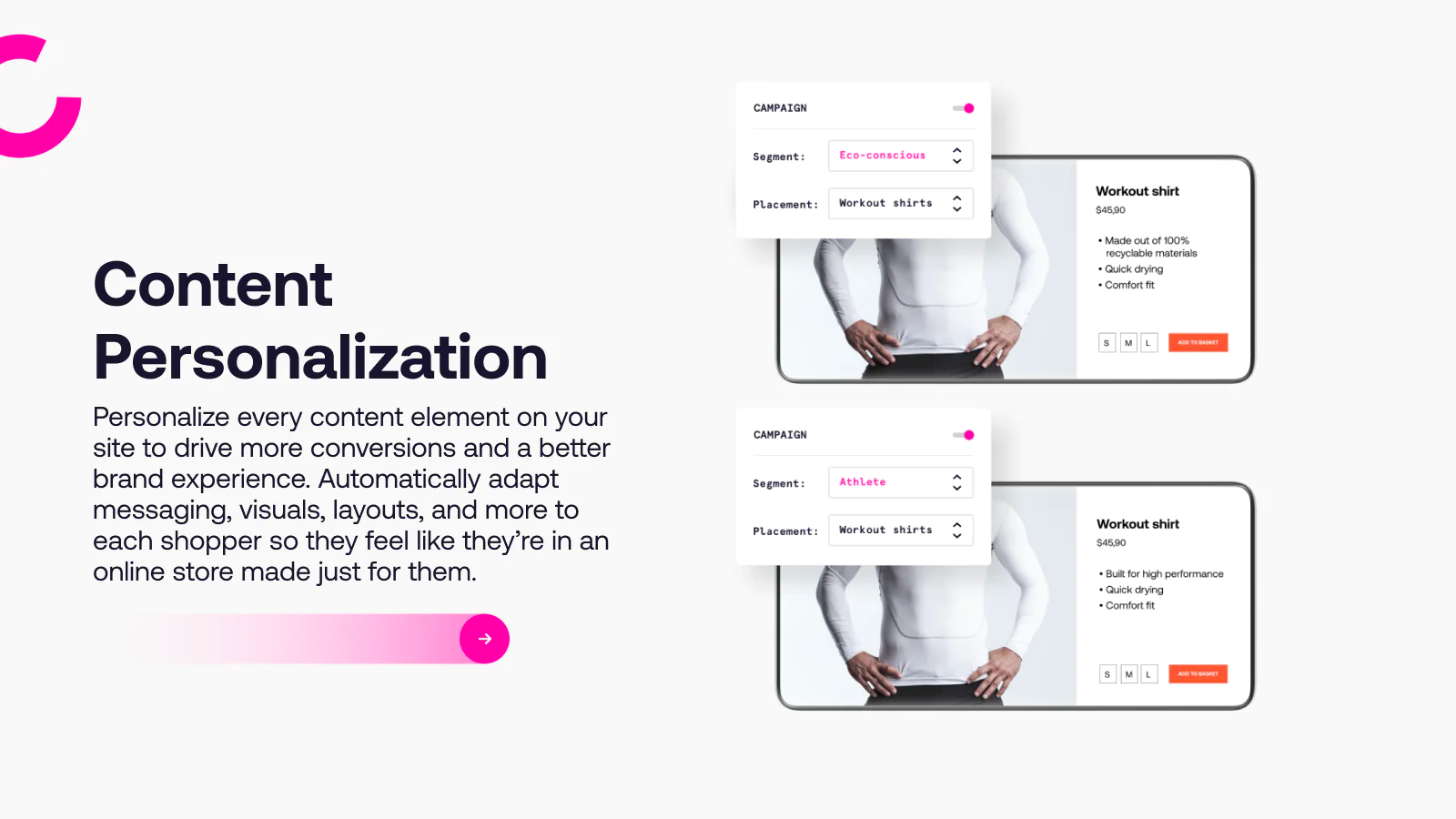
Nosto’s content personalization platform that adapts a website’s messaging, visuals, and layout for each individual shopper.
Wendy Wang, owner of F&J Outdoors, also recommends looking for pain points throughout the customer journey that can act as low-hanging fruit for conversion gains. “Perhaps it’s a cumbersome checkout process, lack of clear product information, or slower delivery times,” she says. “Identifying such stages in the journey allows us to iteratively make enhancements to our end-to-end process, with a clear goal of optimal customer satisfaction.”
Monitor your customer journey to anticipate—and resolve—customer needs
Buying has never been more complex because there’s never been this number of ecommerce platforms, channels, options, alternatives, or competitors.
If you want to grow your business, take a deep look at your customer personas and their journey. Customer journey maps should be adjusted on a monthly or quarterly basis to answer the question “How can we add more value to our visitors at each step of this journey?” or “How can we help customers at each stage achieve their goals more easily?”
The trick to dominating a market isn’t just clever advertising but rather a habit of continuously deepening your understanding of your customer and striving to add more value to their lives. Attention and sales are a side effect of doing this well.
At the end of the day, the brand that can motivate the market most will win.
Read more
- How to Amass +110k Micro-Influencers on Instagram & Increase Referral Sales 300%
- How to Overcome Your Daily Operational Frustrations to Focus on Future Growth
- Product Listing Ads [Gifographic]: How to Increase ROAS & Sales
- How Ecommerce Teams Get Buy-in To Sell More
- Omnichannel Inventory Management: Solving Optimization Challenges to Increase Profits
- 5 Ways Brands Grow Revenue Using Text Message Marketing
- Personalized Shopping Experiences: Ways to Implement for Your Commerce Business
- Multi-Segment Marketing Strategy: How To Create One & Examples
- Returning Ecommerce Visitors: How to ‘Nudge’ Non-Buyers into Taking the Customer Leap
Ecommerce customer journey FAQ
How do you analyze the customer journey?
There are two main ways to analyze your customer’s journey: a quantitative approach and a qualitative approach. The former involves looking at your analytics to determine what steps your customers took before purchase, while the latter involves customer interviews.
What is a customer journey touchpoint?
A customer touchpoint is any point in which your customer engages with your brand. Touchpoints can be online, like viewing your product reviews, or offline, like visiting your store. You can create customer journey maps based on the information you collect.
What is the customer journey map?
A customer journey map is the result of analyzing and diagramming the steps your customers go through pre- and post-purchase. It’s broken down into five stages: awareness, consideration, acquisition, service, and brand loyalty.
Why is a customer journey map important?
A customer journey map increases in importance relative to the number of touchpoints and complexity you introduce to the customer journey. With one, ecommerce businesses can proactively identify customer needs and provide them with information that helps them progress to the next stage—ultimately becoming a loyal customer.
What makes a good customer journey map?
A good customer journey map tells you where your customers come from, how many days or visits it takes to move them from one stage of awareness to the next, and how each segment behaves. It also details which order the sequence tends to fall into.

