


Market shows provide the ultimate opportunity for indie makers and smaller brands to cultivate connections with customers in real life. Getting yourself a trade booth is also a manageable and (relatively) affordable way to showcase your wares in person, rather than investing in a full-scale retail location.
Simply having a market booth, however, isn’t enough. The design of the booth and how you display your products impact a passerby’s likelihood of engaging with your brand. It’s those people that are most likely to turn into paying customers.
Looking for inspiration? This guide shares the best market booth ideas, alongside the latest tips on setting up your market booth for success.
What is a market booth?
A market booth (also known as a vendor booth) is a small space, usually 10 feet by 10 feet in size, within a trade show hall. They provide space for brands to display their products and branding to attract customers.
Market booths at trade shows, craft fairs, and makers’ markets also offer the opportunity to network with fellow entrepreneurs in your area. You can gain access to the event’s audience, test your brand launch in a real-life venue, meet potential wholesale clients, and build a local following.
Trying a pop-up in-person selling experience can also serve as the stepping stone to opening a physical location.
24 creative market booth ideas to stand out
- Create a booth banner
- Add seating arrangements
- Decorate walls or ceilings
- Opt for mobile checkout
- Host a live podcast recording
- Give out bag stuffers
- Maximize vertical space
- Host product demonstrations
- Put bestsellers front and center
- Look for durable materials to repurpose
- Offer booth exclusive discounts
- Partner with a bestie brand
- Experiment with lighting
- Refresh your design often
- Think about flooring
- Be consistent with color choice
- Use music to attract attention
- Include social media opportunities
- Lean into experiential retail
- Run a contest or giveaway
- Host a mini workshop
- Hand out free food
- Distribute free samples
- Collect email addresses
Backdrop and structural ideas
1. Create a booth banner
Trade show attendees often see a banner before they see the booth itself. Use yours to make a strong first impression, which turns footfall into booth visitors.
Get creative with your banner while sticking to these best practices:
- Showcase your retail branding and unique selling proposition front and center.
- Use eye-catching designs, such as illustrations or contemporary art, to draw attention.
- Experiment with a printed backdrop to stand out from white-washed walls.
Holly Is Not an Artist, for example, has a customized booth banner to point visitors towards the brand’s website and social media profiles.
2. Add seating arrangements
Try to leave enough space to create seating arrangements for attendees. Just a few people can make your booth look busy and interesting, triggering herd mentality and encouraging more visitors.
This is especially useful if you’re selling to wholesale or B2B customers at the vendor event. Buyers often want more information before committing to large orders. Give them space to sit down inside your market booth and chat through their options with your sales team.
3. Decorate walls or ceilings
The walls and ceiling of your market booth space are great spaces to showcase your brand—especially if you’re in the creative trade.
“Walls are fantastic for telling your brand story,” says Esme Rogers Evans, jewelry designer and founder of Duxford Studios. “Create well-designed picture boards or use your branding and product photography to build your visual story.
“I also love hanging some intriguing tools on the walls, as I like to promote that I work with a completely handmade process—this can be a fantastic conversation starter.”
One word of warning: Don’t go overboard. Many market booths fill any available space, which results in a cluttered and confusing trade show display. Utilize items to highlight a handful of focal points throughout the market booth, use simple signage, and leave blank spaces.
Here’s an example from Tiny Ink Studio:
4. Opt for mobile checkout
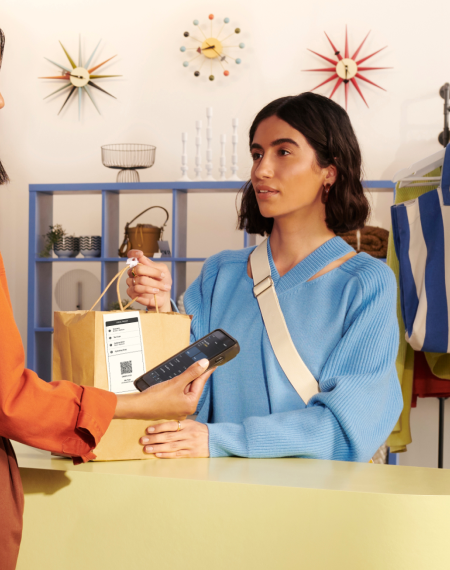
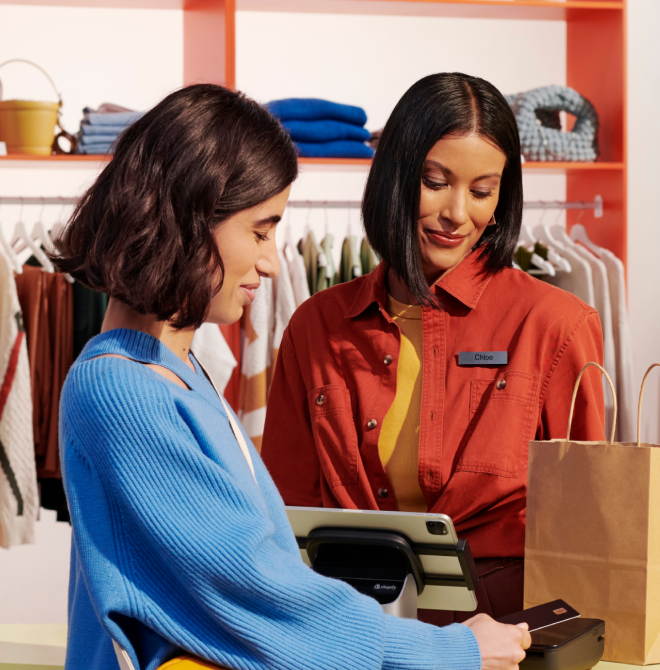
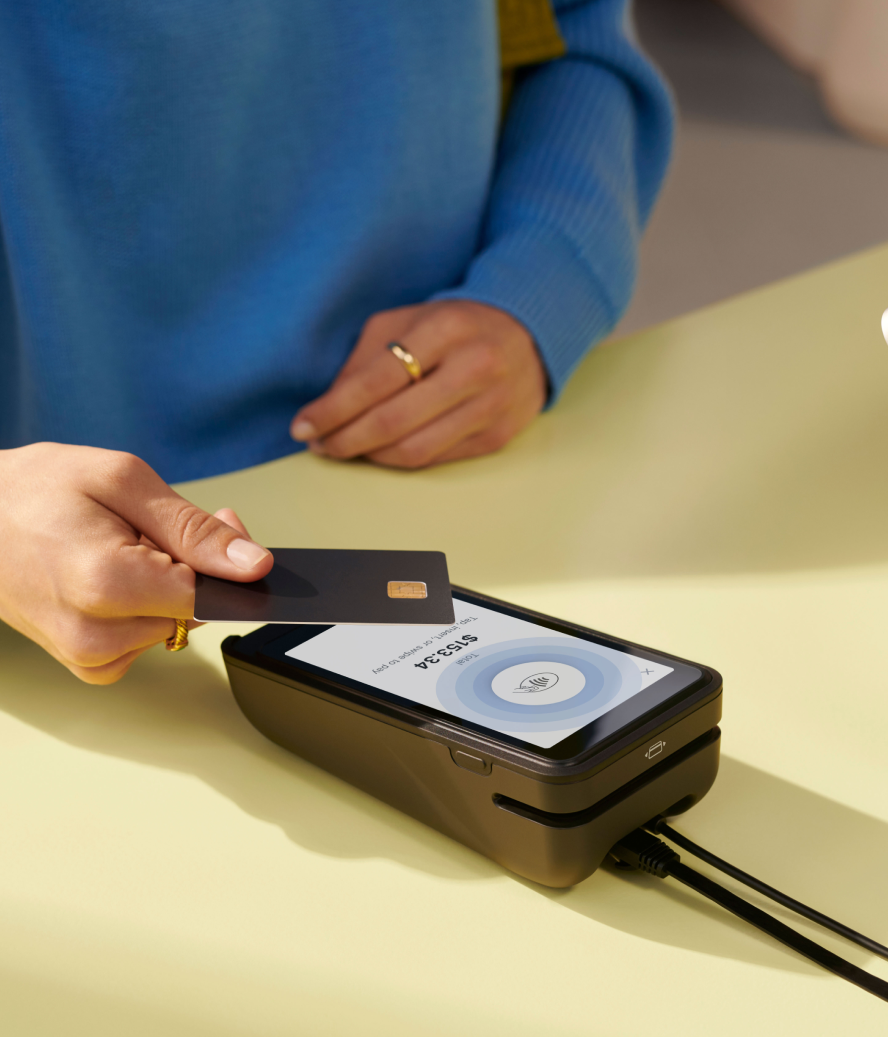
Trade show organizers divide their space into smaller booths and charge accordingly. If you’re on a budget or stuck with a smaller booth, opt for mobile checkout. You won’t need a designated countertop to store a fixed terminal—instead, you can process payments from anywhere in (or out!) of the booth with a mobile POS system and card reader.
💡Tip: Tap to Pay on Shopify POS can turn your smartphone into a credit card reader with no additional hardware required. That’s one less thing to worry about when packing your equipment and setting up a market booth.
5. Host a live podcast recording
Podcasts are booming—just over half of Americans have listened to one in the past year. Capitalize on this, and get more value from your space in the long run, by hosting a live podcast recording at your trade booth.
Prepare a list of talking points and discuss in front of your audience (either solo or with an influencer for an added pull.) You could also invite attendees to get involved by asking questions other listeners might be interested in. Offer a discount code at the end of the recording—like 20% off the products you mentioned—to turn IRL listeners into buyers.
Product display and merchandising ideas
6. Give out bag stuffers
Distribute bag stuffers—small, curated free products relevant to your industry—as a creative way to encourage people to interact with your market booth or pop-up shop.
A bag stuffer might include:
- Branded merchandise, such as t-shirts, mugs, or pens
- Free miniature versions of your products
- Supplementary items, such as sunscreen for beach-related products
“To keep our brand top of mind, it’s important to make sure they have something to take home,” says Nora Sermez, founder of the jewelry brand Nora Sermez. “We gave away a mystery ticket with a QR code that can be scanned for a discount on a first purchase, and for more serious buyers, a signature jewelry box to keep on their vanity.”
7. Maximize vertical space
Booth visitors often look at everything on a table that’s within easy reach, as well as what’s displayed on a wall, such as market booth signs, shelves, or easels.
Use different heights for wall displays and hanging banners or signs. These add visual elements to the ceiling and draw attention to your booth from a distance. You’ll free up floor space and make your booth appear more open and welcoming—without sacrificing brand visibility.
For example, Proper Good showcases prints on shelves stacked vertically.
8. Host product demonstrations
Instead of talking about the benefits of your product, use live demos to showcase your product in action or create a hands-on experience for attendees.
If you sell crafts, for instance, set up a live art demo to give potential customers a sneak peek into your creative process. Visitors will witness your creative process in action, adding a layer of fascination and appreciation for your craft.
Strategically incorporate product demo space into your booth’s original design or pick a booth with a small workstation for demos. Make sure there’s plenty of space for people to move about, mingle, and easily access the demo display.
If you can’t hold a live demo, give your booth visitors a virtual demo. Use an Android tablet or iPad kiosk, then find interactive elements, like augmented reality (AR) features, to give visitors a hands-on experience that’s almost as good as holding the real thing. Be sure to also get a little face time with visitors so they don’t just play with the demo and leave without talking to someone.
9. Put bestsellers front and center
Your bestselling products are popular for a reason—they have mass appeal. Displaying them front and center of your market booth draws people in, especially those who might be unfamiliar with your brand.
Plus, when you label a product as a “bestseller,” it creates a sense of trust and helps nudge new or indecisive customers toward a quicker buying decision. People tend to gravitate toward what’s already been validated by others.
Here’s what that might look like for George’s Bakery:
💡Tip: Bestsellers often differ by location—what sells best online might not be the most popular at trade shows when customers can physically interact with products. Use Shopify Analytics to compare product performance and sell-through rates by location.
10. Look for durable material you can repurpose
There’s no need to design your market booth from scratch at each retail event. Save money on your market booth display by repurposing durable material. Get inspired by your product and brand, and see how it can help inform the materials you use for décor.
11. Offer booth exclusive discounts
Limited-time deals motivate market booth attendees to buy or commit on the spot, rather than waiting and potentially forgetting after the event. Discounts can also encourage impulse purchases, particularly if the offer is only available at the show. They need to act now to take advantage.
But exclusive offers don’t have to be discounts. Create product bundles to combine your bestsellers and encourage product discovery, or offer free ship-to-home services for larger items. These help combat common sales objections—like not knowing which item to buy, or purchasing a product they’ll have to carry around all day.

12. Partner with a bestie brand
Prime spots at popular events can run into the thousands. Split the cost by partnering with another retailer. Two budgets mean you can afford better seating, high-end tech for the workshop, or a more prime location on the floor.
Partnerships also let you offer more to your customers, especially when you sell similar (but not competing) products. If you’re showcasing a line of fitness apparel in the market booth, for example, partner with a supplements brand. You could create an exclusive bundle including both brands’ products, or host a mini workout session wearing your clothes and hand out free supplement samples to take after.
Lighting and ambiance ideas
13. Experiment with lighting
A well-lit market booth creates an attractive atmosphere that draws visitors, generates interest in your product, and promotes sales.
Accent lighting, for example, spotlights the most important elements of your booth, like your branding, displayed products, or marketing messages, which helps visitors understand a bit about who you are. Flattering hues are good for your booth staff and visitors, while spotlights are ideal for highlighting product details or a part of your display, like your brand name or logo.
14. Refresh your market booth display often
An inexpensive way to keep your market booth current is to regularly refresh the display. This tactic is especially handy if potential customers visit the booth at more than one event. A unique experience each time could be enough to draw them back and increase pop-up sales.
For each trade show event, brainstorm market booth ideas that experiment with:
- Different shapes and layouts
- Lighting effects
- Product displays
- Interactive experiences
- Booth decoration
For example, Tailfeather + co explains its decision to use an L-shaped market booth layout:
15. Think about flooring
Since every touchpoint of your market booth adds to the overall story of the booth space, flooring can help immerse your visitors even further into your brand’s world.
Plus, visitors might want to take “flat-lay” pictures of your products and shoefies (shoe selfies) to post on Instagram. When they tag your brand in those pics, it creates a library of user-generated content (UGC) you can share in your Instagram Stories or repost to your own account (with permission).
16. Be consistent with color choice
There’s a reason photographers and top brands use white backdrops to shoot items—it really makes the products pop. Keep that principle in mind with your market booth: Use muted colors to help make your products stand out.
If you’re going with another color palette, try matching it to your brand color for your packaging or signage—and maybe even how you dress at the show. Uniformity and consistency make for stronger branding. Your goal is to create a cohesive and on-brand look with the elements and colors you choose.
For example, Snarki Studios uses the same pink color scheme for its market booth sign and price lists:
@snarkistudios I traded in my hometown’s shopping center for the first time last week and I am still in absolute shock about how well it went! 🥹 A big thank you for @Design 44 ‘s meet the makers market for having me, it was an incredible day and so lovely to meet wonderful customers in person 💖 This has definitely been a huge sign to do more markets next year 👀 #christmasmarket #derby #meetthemakers #pinkstationery #smallbusiness ♬ original sound - 𝙇𝙭𝙪𝙞𝙨𝙨𝙤𝙪𝙣𝙙𝙯 🎧
17. Use music to attract attention
Audio adds to the sensory experience your market booth visitors have. This seemingly small factor can influence sales, too: Customers spend 42.24% more time in store when the retailer plays on-brand music (versus none at all).
On-brand music is the key here. Make sure any audio you play matches the vibe and aesthetic of your brand. If your personality is fun and upbeat, for example, pick a playlist with the tempo to match.
💡Note: You can land yourself in hot water by using audio you haven’t got a license for. Opt for royalty-free versions instead—you can have AI do this for you, if you’re looking for something custom.
Customer engagement and sales ideas
18. Include social media opportunities
If you want to encourage people to hang around and stay engaged on social media while visiting your market booth, try setting up a makeshift selfie station. Simply create a backdrop with a Bristol board or cardboard, or reserve a “blank space” on one of your market booth’s walls. You can also cut a frame out of cardboard to serve as a selfie prop.
Whether you use a wall or a frame, make sure your branding, URL, hashtags, and social handles are clearly incorporated. It’s a fun way to encourage user-generated content that you can then post on owned social media channels.
CeraVe, for example, builds Instagram-worthy backdrops—like this supersized bath tub—and invites influencers to record their own content there.

19. Lean into experiential retail
Long gone are the days of visiting a trade show with the sole purpose of buying a product. These days, customers also want experiences from the brands they’re shopping with. Offering these experiences in your booth can help you stand out from other vendors.
Experiment with different trade show booth ideas that make the experience shareable. For example, brainstorm fun market booth activities like:
- Virtual fitting rooms
- “Spin the wheel” competitions
- Photo booths with branded printouts
- Motion-sensor games
Here’s an example from Boundless, a snack brand that uses games to hook people in:
20. Run a contest or giveaway
A contest or giveaway is an easy way to get the conversation flowing with booth visitors. The customer gets something for free (entry into a competition), while you open the floor to learn more about what they’re shopping for.
Ask shoppers to supply their email address or sign up for your newsletter for the chance to win something. For example, they could win a gift card for your store, a gift basket filled with your products, or an impressive discount code to redeem on their next purchase.
Announce the contest winner at the end of the day, every hour, or even via email to keep the conversation going with your customers post-event.
21. Host a mini workshop
If you have a demonstrable product, give customers hands-on experience by hosting a mini workshop inside your booth. This increases dwell time (how long they spend at your booth) and factors into herd mentality: “Lots of people are there. What are they doing?”
For example, Abbode takes a similar approach at its trade booth. Buyers can embroider their initials onto a charm and layer it onto a product to create a customized version. Staff can talk people through the embroidery process as the machine works its magic.
22. Hand out free food
Looking for a smart hack that drives people toward your market booth? Take a leaf from Costco’s book and offer free food to visitors. It’s a great conversation starter your sales team can use to segue into product pitches.
Packaged products work best since you’re unlikely to have access to cooking appliances. That could include:
- Chips
- Cookies
- Popcorn
- Candy
- Chocolate
- Fruit
If it makes sense for your business, you could even offer food that’s somehow relevant to your products or branding. For example, attach your business card or a branded sticker to the packaged food you give out. Or if you’re a kitchenware brand, find clever or logical ways to incorporate your food offering into your product merchandising.
For instance, DesignMe Hair hands out free cotton candy from its market booth to draw people in.
@designmehair These were our most popular activations at our recent booth for Premiere Orlando! Did we see you there?😉 #tradeshow #branding #behindthescenes #prevent #eventplanning #cottoncandy #mascot #philipwolff ♬ Space Girl by Francis Forever sped up - Audio Acre
23. Distribute free product samples
Providing product samples allows booth attendees to interact with a miniature version of your product. Instead of guessing which item they’ll get the most value or enjoyment from, they can try before they buy and make a more confident decision.
Free samples also act as conversation starters with people passing by. Spencer Lynn, northeast regional manager at KOS, advises, “Step out from behind your booth and get in front of it, hand out some samples in the aisles. If it’s really slow, I’ll grab some of our single-serving sample sachets and walk the floor myself and hand them out as I go. Sometimes people will come to seek out our booth after that to find out more info.”
As another example, Jimmy’s Iced Coffee has a fridge stocked with flavors for attendees to try.
24. Collect email addresses
Collecting email addresses helps you stay in touch with market booth visitors—even if they don’t buy. It also builds up your lead list for follow-up marketing.
To collect email addresses at the market booth:
- Offer an incentive. That could be discounts on items visitors buy at your booth or branded freebies in exchange for their email addresses.
- Make your email opt-in form as simple as possible. For digital forms, have a tablet ready for visitors to fill out the forms. Alternatively, use QR codes with a call to action (CTA) like “Sign up for a giveaway” on your flyers, posters, sign-up form, or even the booth walls to streamline the collection of email addresses.
- Send personalized email carts. Use Shopify POS to load the items a customer was interested in into a cart, then send an email with a link to complete their checkout online later.
After the event, send thank you emails to visitors who signed up for your mailing list to show you appreciate their interest in your product or brand. Remind them they signed up at the event. Include a link to an online form where they can confirm their subscription via email and a clear CTA of what you want them to do next, like “Visit our website” or “Get tickets to our next vendor event.”
💡Tip: Shopify unifies every piece of data you’ve collected on a customer into a single record, based on their email address or phone number. This gives you a 360-degree view of each customer, which you can use to segment subscribers and personalize outreach after the event.
Planning your market booth
Define your goals and budget
Market booth success lies in being creative and repurposing items for different uses. For example, consider using books as risers or china saucers as holders for small items like jewelry or pins.
Other fun market booth display items include:
- Ladders
- Toolboxes
- Drawers
- Kids chairs
- Boxes or crates
- Racks
- Three-tier booth stands
Sometimes, the items you need are right in front of you—they might be gathering dust in your home or the home of a family member. Check your rooms and/or studio for things you can use, such as tables, containers, and props.
Even consider bartering with other vendors before the trade show starts. See if they have any items you can trade or borrow for the event. Organizers may also have materials on hand to lend out or rent.
Choose the right booth layout for your space
Once you’re approved to attend the market or craft show you’re aiming for, contact the show’s organizers to get the floor plan and any rules or regulations regarding market booth setup.
Booth regulations can be a creative challenge—how will you conceptualize the booth space within the constraints? You may only have a 10-foot by 10-foot space within which to tell your brand’s story.
Ask yourself what items you need to display and what the best way is to present your products. Sketch out a few possible retail layouts with a planogram, and don’t forget to leave room for areas to process payments and for storage.
Running your market booth on event day
Set up your display efficiently
Equipped with your vision and the show’s plan, consider how you’re going to build your booth. If you have a good handle of your moodboards and enough inspiration, you might be able to sketch out the blueprints yourself with the help of interior design apps.
If it’s overwhelming and you plan to attend more than one show, research companies that specialize in booth design and development.
There are three more things to keep in mind:
- Make your market booth easy to put up and take down.
- If you plan on attending multiple shows, you don’t want your booth to be too “out there” in terms of design and market booth display elements. Try to ensure that your market booth, while original, is still “one size fits most.”
- Consider the lighting and electricity resources of the show you’re attending. Where are the power outlets? Are there restrictions around lighting? And is power access included in the vendor fee?
Engage with customers (without being pushy)
Step away from any distractions and welcome everyone who steps up to your market booth. This ensures browsers and potential shoppers know you’re available in case they have any questions.
"Our number one rule at the booth is to always be engaging and make conversation with passersby," says Chris Meade, co-founder of CROSSNET. "Take time to educate, have them try out the games, or simply make them crack a smile. People typically hate being sold to, so do your best to strike up a conversation and you’ll be surprised at how far it gets you."
Use items as icebreakers that automatically encourage interaction, ask your visitors questions, talk about your process, and generally be open. If customers think they’re interrupting you, they’re less likely to ask about an item or purchase something, which is another missed opportunity.
Run a seamless market booth with Shopify POS
The less equipment you have to manage at a market booth, the more attention you can dedicate to your customers.
Opt for Shopify POS, the all-in-one mobile POS system that allows you to:
- Process popular payment methods on the go using mobile card readers or Tap to Pay technology.
- Track inventory levels and prevent overselling—which is critical if you’re selling both online and at events.
- Collect and organize customer data to personalize the shopping experience.
- Complete checkout quickly with automatic discounts, advanced product search, and barcode scanning integrations.
- View real-time sales reports to measure the success of your market booth.
Since Shopify is the only platform to natively unify POS and ecommerce on the same solution, you get one source of truth for every sales channel.
All of your sales channels—including pop-up shops, permanent retail stores, and ecommerce websites—all operate from the same business “brain.” As a result, you get real-time insight into inventory, order, and customer data—an approach proven to reduce total cost of ownership by 22% on average.
Market booth ideas FAQ
What sells best in a market booth?
- Handcrafted items
- Artwork
- Innovative gadgets
- Customized apparel
- Eco-friendly products
- Cosmetics/beauty products
- Books
- Jewelry
How do you make a booth interesting?
- Choose the right booth location.
- Offer immersive or interactive experiences.
- Give away free food or product samples.
- Use a photobooth or selfie wall.
- Host a contest or giveaway.
- Include social media opportunities.
How do you stand out at a vendor fair?
- Apply bright colors to your booth’s design.
- Use a theme to create a cohesive display and weave a consistent message.
- Experiment with lighting to make your booth more unique and exciting.
- Incorporate live or virtual demos and unique interactive activities.
- Give away unique, high-quality, and useful promo items.
How much does a market booth cost?
Market booth costs vary depending on the location, event type, and booth size. You can generally start selling at a local farmers market or craft fair for as little as $100 per day. Larger events, such as festivals and B2B trade shows, are more expensive because they attract higher footfall and a niche target market.

